arXiv: 2604.22234 · PDF
作者: Taizun Jafri, Vidya A. Chhabria
主分类: cs.AR · 全部: cs.AR
命中关键词: large language model, llm, agent, agentic, rag
TL;DR
GR-Evolve 用 agentic LLM 针对具体设计自动演化 global routing 源码,在 OpenROAD 上实现 design-adaptive EDA,线长最多减少 8.72%。
核心观点
- 提出 design-adaptive EDA tooling 概念:让 EDA 内部算法按设计特征自动特化,而非只调超参。
- 构建 GR-Evolve:以 QoR 反馈驱动 LLM 迭代改写 global router 源码的 code evolution 框架。
- 给 LLM 装配 open-source global router 的 persistent contextual knowledge 及 OpenROAD QoR 评估工具链。
- 证明 LLM 驱动的源码级演化在 global routing 上优于固定启发式基线。
方法
框架把 global routing 源码交给一个 agentic LLM,循环地"修改代码 → 在 OpenROAD 中跑 detailed routing → 读 QoR → 据反馈再改"。LLM 具备对开源 global router 的持久上下文知识,并通过集成工具链自动调用评估。优化目标围绕 post-detailed-routing QoR(主要是 wirelength)。方法属于 code evolution,而非参数搜索或 learning-to-rank。
实验
- 基准:7 个 benchmark designs。
- 工艺:3 个 technology nodes。
- 基线:existing global router(摘要未具名)。
- 指标:post-detailed-routing wirelength(QoR)。
结果
相较基线 router,post-detailed-routing wirelength 最多降低 8.72%。摘要未披露平均收益、runtime、congestion/DRC 等其它指标,也未说明跨 design 稳定性,因此"全面更优"的结论需看正文。
为什么重要
首次把 agentic LLM code evolution 用于改 EDA 工具的核心算法源码,而不是调 hyperparameter 或替换子模块。若可扩展,意味着 routing、placement、STA 等工具都能按 design 定制算法实现,给 EDA 生产力打开新维度;对 LLM-for-systems 也是一个具备真实 QoR 闭环的范例。
与已有工作的关系
- 延续 ML-for-EDA / hyperparameter tuning(如 autotuning flows)但跳出静态算法约束。
- 与 FunSearch、Eureka、AlphaEvolve 等 LLM 代码演化工作思路相近,应用域换成 global routing。
- 依托 OpenROAD 基础设施,属于 open-source EDA + LLM agent 的结合。
尚未回答的问题
- 演化出的代码能否跨 design / 跨工艺泛化,还是每个 design 都要重跑?
- runtime、token 成本、能耗与收益的 trade-off 如何?
- 对 congestion、DRC violations、timing 等其它 QoR 维度是否也有改进或退化?
- 方法能否推广到 placement、CTS、detailed routing 等更复杂模块?
- 演化产生的代码可读性、可维护性与正确性验证机制如何保障?
论文图表
图 1: Figure 1 (extracted from PDF)

图 2: Figure 2 (extracted from PDF)
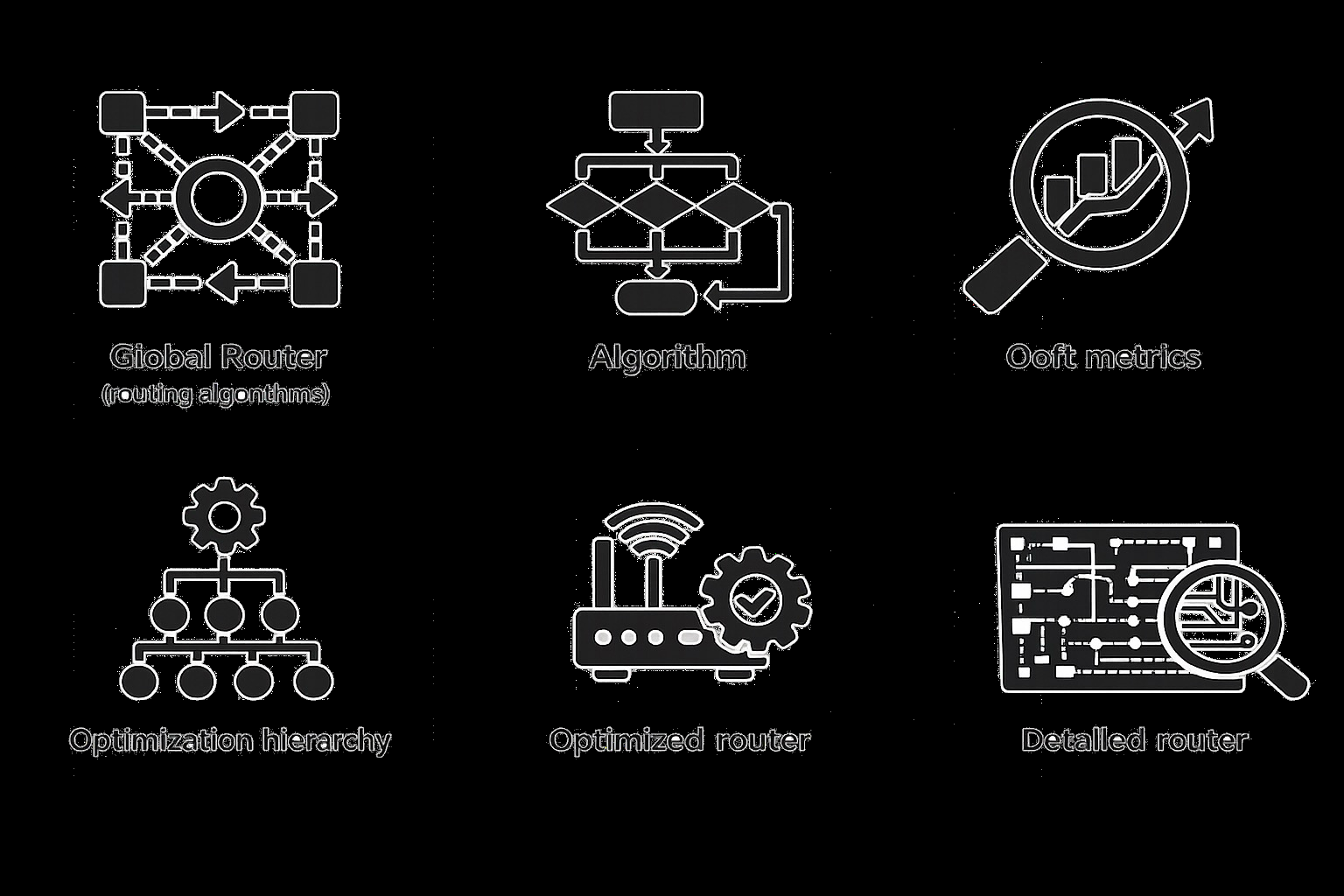
图 3: Figure 3 (extracted from PDF)
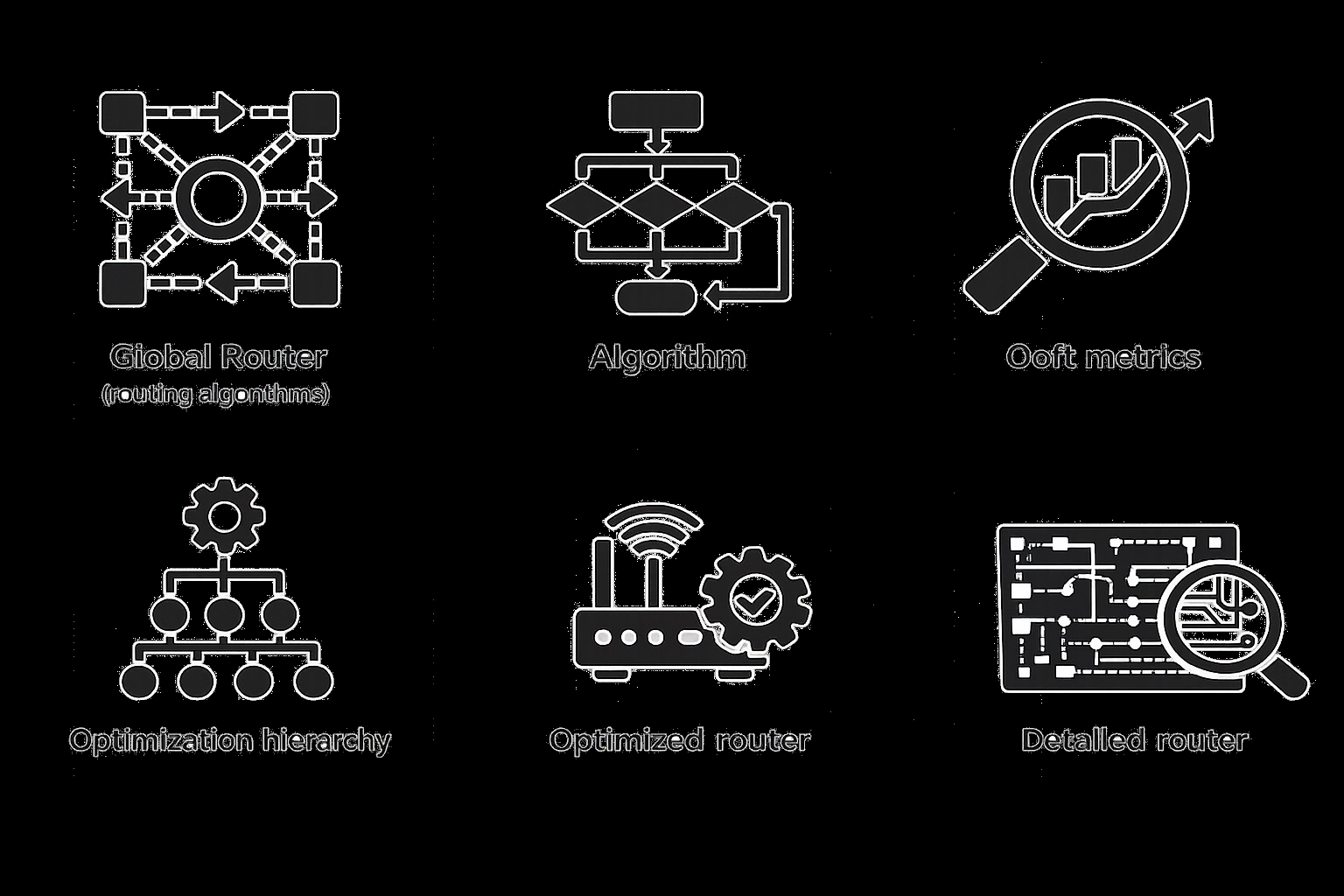
原始摘要
Modern ASIC design is becoming increasingly complex, driving up design costs while limiting productivity gains from existing EDA tools. Despite decades of progress, current tools rely on fixed heuristics and offer limited control via tool hyperparameters, requiring extensive manual tuning to achieve an acceptable quality of results (QoR). While prior work has explored learning-based optimization and design-specific hyperparameter tuning, these approaches operate within the constraints of static tool algorithm implementations and do not adapt the underlying algorithms to individual designs. To address this limitation, we introduce the concept of design-adaptive EDA tooling, in which the internal algorithms of EDA tools are automatically specialized to the characteristics of a given design. We instantiate this paradigm through GR-Evolve, a code evolution framework that leverages an agentic large language model (LLM) to iteratively modify global routing source code using QoR-driven feedback. The framework equips the LLM with persistent contextual knowledge of open-source global routers along with an integrated toolchain for QoR evaluation within the OpenROAD infrastructure. We evaluate GR-Evolve across seven benchmark designs across three technology nodes and demonstrate up to 8.72% reduction in post-detailed-routing wirelength over existing baseline routers, highlighting the potential of LLM-driven EDA code evolution for design-adaptive global routing.